
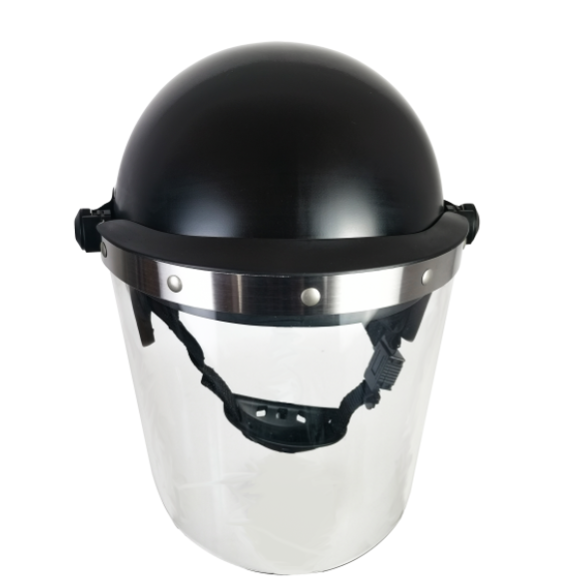
In recent years, civil unrest and public demonstrations have necessitated the use of specialized protective gear by law enforcement agencies worldwide. Among such protective gear, anti-riot helmets are crucial for ensuring the safety of police officers during confrontations. Variations in design and functionality of these helmets are evident among different countries, particularly when comparing those used in China to those in Southeast Asia, including Malaysia and the Philippines.
China’s anti-riot helmets are engineered with a focus on advanced composite materials to offer high-level protection against impact, penetration, and ballistic threats. These helmets often incorporate additional features such as visors resistant to chemical agents and fire retardancy. The emphasis in China is on equipping officers with comprehensive protection to handle large-scale, intense encounters. The designs tend to be robust and heavy-duty, reflecting the need to mitigate various threats in high-risk environments.
Conversely, Malaysia’s riot helmets demonstrate a balance between protection and comfort. Recognizing the hot and humid climate of Southeast Asia, these helmets prioritize breath ability and lightweight construction to ensure wearers’ comfort during long hours of duty. The Malaysian designs typically feature adequate ventilation systems and ergonomic structures that allow for a wider range of motion, catering to the geographical and climatic needs of the region.
In the Philippines, anti-riot helmets are fashioned to afford versatility and cost-effectiveness. These helmets tend to be designed with modular components, allowing law enforcement agencies to adapt and upgrade parts as needed. This modularity ensures that helmets can be adjusted for different scenarios, from full-scale riots to less intense public order policing tasks. Furthermore, the materials used are selected to be durable yet affordable, reflecting the budgetary constraints common in many Southeast Asian policing units.
In summary, while riot helmets in China, Malaysia, and the Philippines share the common goal of protecting law enforcement personnel, the differences lie in their design philosophies. China’s helmets emphasize maximal protection with high-tech materials, Malaysia’s focus on comfort and suitability for tropical climate conditions, and the Philippines balance adaptability and economic efficiency. Understanding these regional differences underscores the importance of context-specific design in law enforcement gear, ensuring that protective equipment meets the unique demands of its operational environment.
Post time: Jan-23-2026